Background
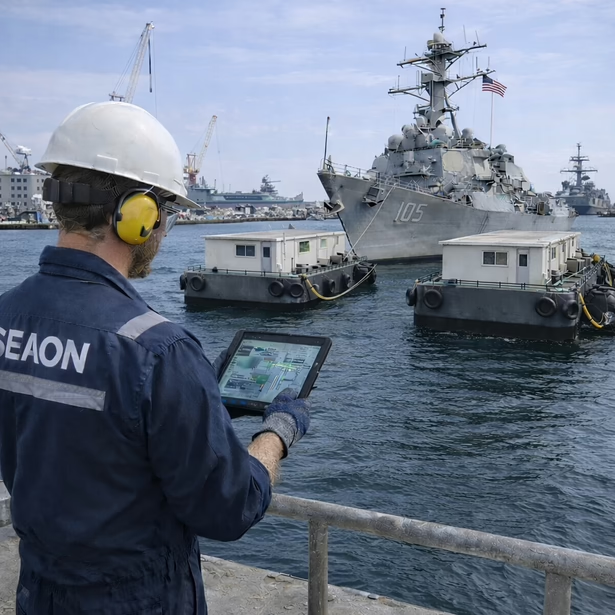
The US Navy’s operations in the Western Pacific region are based in locations owned and serviced by host nation governments, making infrastructure investment difficult, slow, and sometimes impractical. Furthermore, the most significant and largest naval operation in the region, Japan, has been experiencing dramatically increasing activity levels while at the same time facing increasingly stringent environmental regulations, both requiring significant investments to improve wastewater treatment capabilities in compressed timeframes.
Project Facts
- Project Type: Industrial Wastewater & Energy Recapture Infrastructure
- Location: Japan (US Naval Operations)
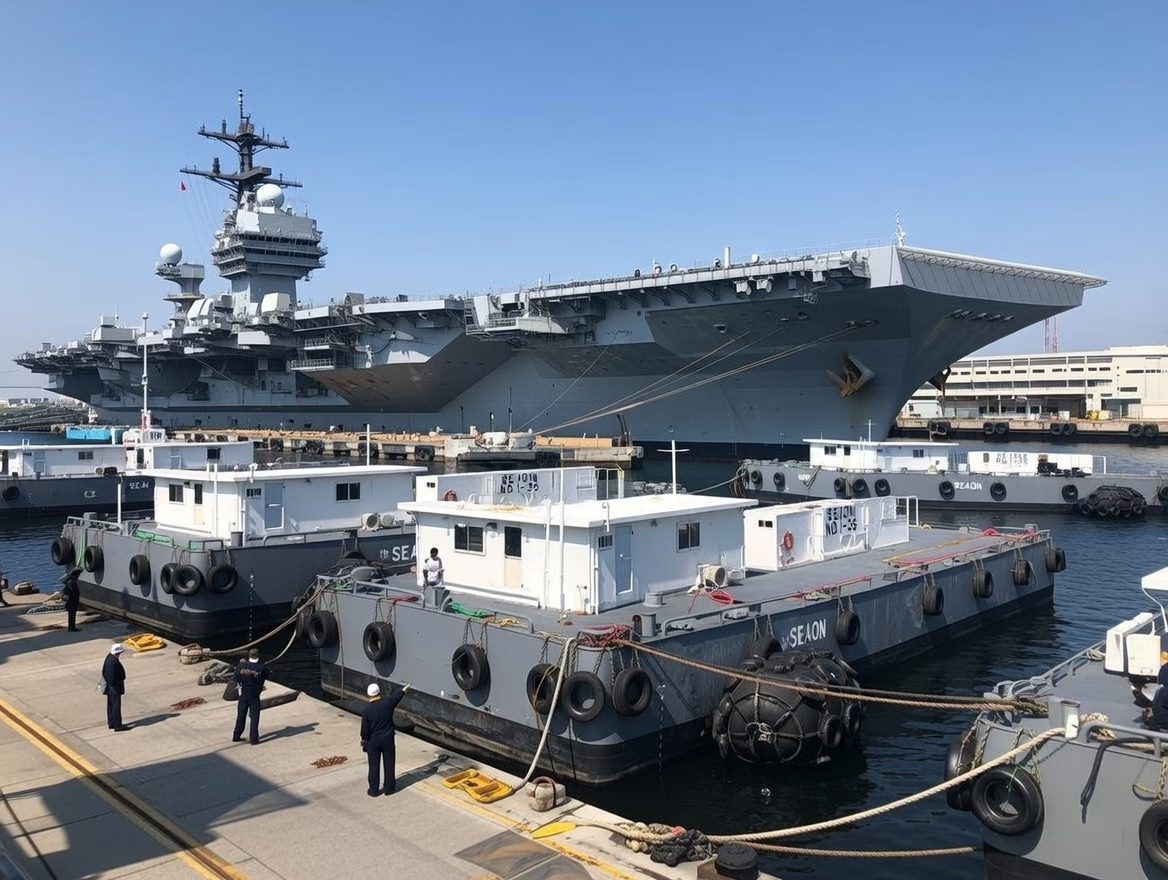
- Model: Mobile, Modular Wastewater Treatment Infrastructure Service
- Funded Capital: US$25 million (to date)
- Project Timeline: October 2016 to Present
Opportunity
The US Navy, leading the world in advanced capabilities and technology yet regularly under budget constraint, sought creative ways to expand its wastewater treatment and energy recovery capacity. Their goal was to meet new PFAS, environmental, and sustainability requirements while simultaneously saving money and reducing energy-related operating expenses.
Veritas formed and funded Seaon Global LLC and Seaon Environmental LLC to acquire and provide a new advanced form of wastewater and energy technology as a service – a new agile wastewater infrastructure system that enabled flexibility and advanced technology simultaneously. Seaon was selected to provide this infrastructure as a service at all three primary US Navy ports in Japan.
Key Benefits with Veritas
By converting a capital budgeting problem into a managed utility service, the Navy realized immediate operational savings and transferred 100% of the funding, technical, capital and environmental risk to these Veritas companies.
Rapid technology expansion with private capital for public good.
Ability to stay ahead of escalating PFAS requirements from both US and Japanese regulators.
Low impact capacity increase, flexibly adapting to large swings in month-to-month port activity levels.
A streamlined process, funded by Veritas, for expansion and upgrade projects.